Client-Side vs Server-Side Encryption: Which Cloud Storage Keeps Your Data Safer?
Published by May Software
When you store files in the cloud, encryption is your last line of defense against unauthorized access. But not all encryption is created equal. The key distinction lies in where encryption happens: on your device (client-side) or on the provider's servers (server-side). This choice has profound implications for your privacy, security, and legal protections.
Understanding the Two Approaches
Server-side encryption is the most common method used by mainstream cloud providers. When you upload a file, it travels over an encrypted connection (TLS) to the provider's servers, where it is then encrypted using a key managed by the provider. This protects your data at rest—if someone steals the hard drives, they can't read the files. However, the provider retains the ability to decrypt your data, because they hold the keys. This means they can access your files for various reasons, such as complying with legal requests or analyzing usage patterns.
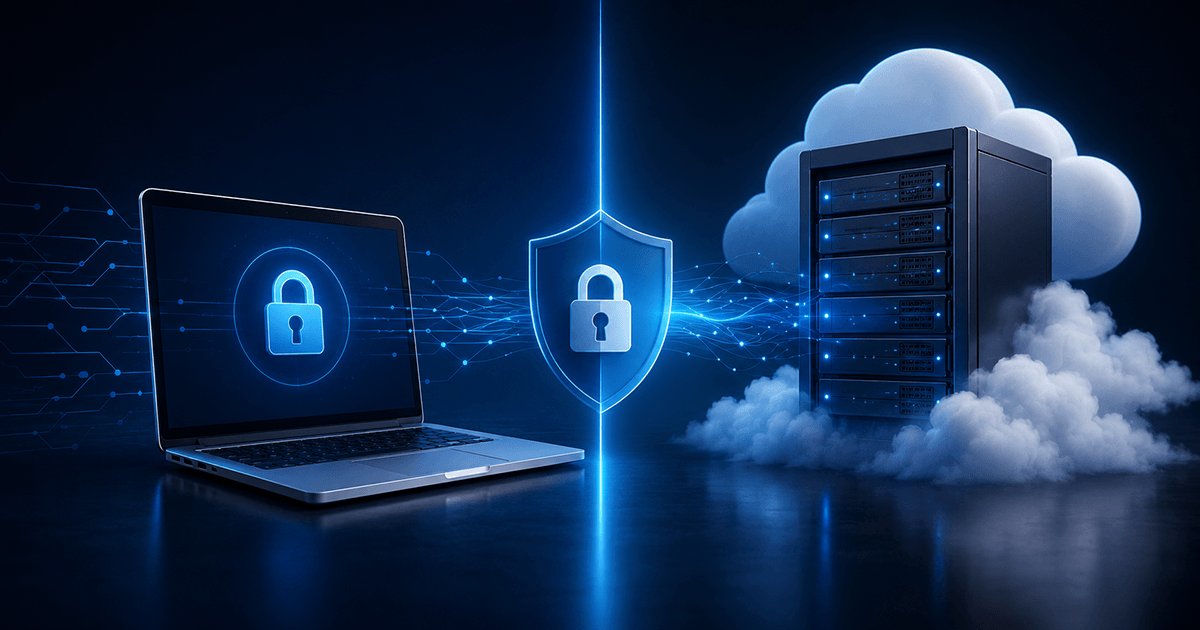
Client-side encryption (also known as end-to-end encryption) happens on your device before any data leaves your computer. Your files are encrypted using a key that only you possess. The encrypted data is then uploaded to the provider's servers, who see only ciphertext—gibberish without your key. This approach is often called zero-knowledge because the provider has no knowledge of your file contents or encryption keys.
Security and Threat Models
The threat model for server-side encryption assumes the provider is trustworthy and will protect your keys. But it leaves you vulnerable to insider threats (employees with access), legal subpoenas, and government requests. In jurisdictions with broad surveillance powers, providers can be compelled to hand over your decrypted data.
Client-side encryption shifts the trust boundary. Even if the provider is compromised, suffers a data breach, or receives a legal order, your data remains unreadable without your key. This is particularly important for sensitive documents, trade secrets, or personal data that could be used against you.
However, client-side encryption introduces challenges: key management becomes your responsibility. If you lose your key, your data is lost forever. Some services offer recovery options, but these often weaken security. May·Secret, for example, uses a zero-knowledge architecture where only you hold the decryption keys, and offers secure recovery mechanisms that don't expose your data to the provider.
Legal and Regulatory Considerations
In France and the EU, data protection laws like the GDPR impose strict obligations on data processors. When you use a cloud service with server-side encryption, the provider is a processor and may be required to disclose data to authorities under certain conditions. Client-side encryption can help you maintain control over personal data, as the provider cannot access the content without your consent.
Recent regulatory developments have emphasized the importance of encryption for protecting personal data. While specific laws may evolve, the principle is clear: encryption is a key safeguard. By using client-side encryption, you reduce the risk of unauthorized disclosure and demonstrate compliance with data protection principles like data minimization and confidentiality.
Practical Implications for Users
For everyday users, the choice affects convenience vs. security. Server-side encryption is transparent—you don't need to manage keys, and features like server-side search and thumbnail generation work seamlessly. Client-side encryption often sacrifices these features, as the provider cannot see inside your files.
But for businesses handling confidential information, journalists protecting sources, or individuals safeguarding medical records, client-side encryption is non-negotiable. It ensures that even if the service provider is hacked, your data remains secure.
May·Secret is designed with this in mind: all files are encrypted on your device before upload, and the encryption keys are generated and stored locally. The service operates in France, subject to strict European privacy laws, and provides a transparent zero-knowledge policy.
Conclusion
Both methods have their place, but for true privacy, client-side encryption is superior. It eliminates the 'trust us' model and puts you in control. When choosing a cloud storage provider, ask: where are the encryption keys? If the answer is 'on our servers', your data is not truly private. Choose a service that prioritizes your security with client-side, zero-knowledge encryption—like May·Secret.
Ready to store your files with full confidentiality?
The blog letter
Get our next posts by email, as soon as they're published.